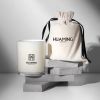
Candle Industry Insights
The candle manufacturing sector is confronting significant cost pressures in 2026, as raw material markets experience unprecedented volatility that is fundamentally reshaping production economics. Paraffin wax, the dominant raw material accounting for 42.2% of revenue share in 2025, has seen prices fluctuate dramatically. China FOB paraffin wax prices maintained a declining trend through the first two quarters of 2025, falling from approximately USD 1,175 per metric ton in Q1, followed by a 21% month-on-month correction before a Q4 recovery. By January 2026, domestic Chinese paraffin prices stabilized, with 58# semi-refined wax averaging 6,668 yuan per ton, though the broader trend remained uncertain.
The paraffin market itself is projected to grow from USD 6.13 billion in 2026 to USD 7.62 billion by 2031 at a CAGR of 4.45%. However, the supply-demand dynamics tell a more complex story. In 2025, paraffin supply contraction did not outpace downstream consumption decline, resulting in a positive supply-demand gap throughout the year. The increasing annual production of Fischer-Tropsch wax has created sustained competitive pressure on traditional paraffin markets. By early 2026, the domestic Chinese paraffin market experienced periodic oversupply, triggering price declines.
The impact on candle manufacturers has been severe. According to industry research, prices for paraffin, soy-blend additives, decorative glass, zinc-core wicks, and scent compounds rose sharply, compressing margins for mass-market, private-label, and premium candle producers alike. The escalation of the US-China trade war in January 2025 further exacerbated these pressures, increasing tariffs on chemicals, fragrances, and packaging materials, disrupting global candle supply chains.
To manage tariff exposure, global brands have shifted sourcing of jars, vessels, wicks, and fragrance bases to Vietnam, Malaysia, India, and Mexico. These transitions, however, have led to temporary capacity shortages, extended lead times, and certification delays for fragrance safety and packaging compliance. In mid-2025, the US raised tariffs on Indian exports of stearic acid, glycerin derivatives, and heat-resistant glass containers, further increasing sourcing costs for US candle brands.
Candle manufacturers now face a critical strategic decision: whether to absorb rising input costs, pass them to consumers, or reformulate products with alternative waxes. The candle making segment absorbed 60.32% of global wax volume in 2025, highlighting the industry's outsized dependence on stable wax supply. Manufacturers that can diversify sourcing, invest in alternative wax formulations, and build supply chain resilience will be best positioned to navigate this volatile environment.