
Share of real cases from customers
The Client: Lagos Glow Wholesale – a fast-growing distributor serving 400+ retail shops, market stalls, and hotel suppliers across Nigeria, Ghana, and Kenya. Founded by Chidi Okonkwo in 2018, the business had grown from a small Lagos warehouse to a regional player with 22 employees. But Chidi was losing sleep over one number: 22% breakage rate on every candle shipment.

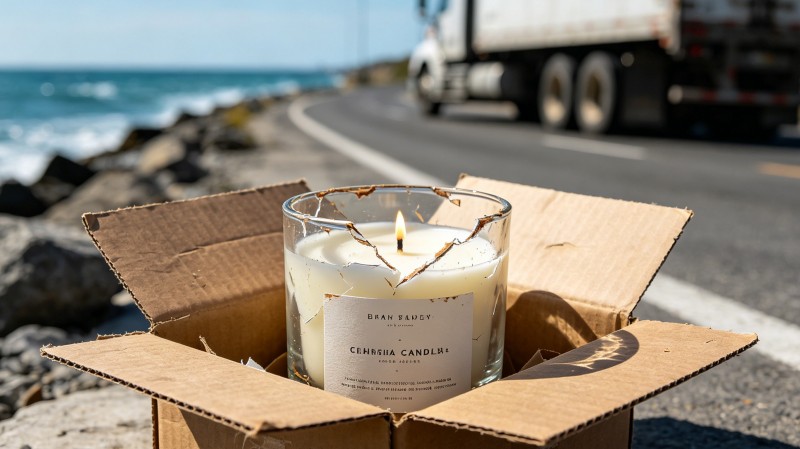
The Pain Point: Chidi's previous supplier (a Turkish manufacturer) shipped candles in flimsy single-wall cartons with minimal internal padding. The journey from Turkey to Lagos – 35 days by sea, plus 5–7 days of rough trucking on poorly paved roads – meant that nearly one in four candles arrived cracked, chipped, or completely shattered. “I was throwing away money,” Chidi told us. “On a 10,000-candle order, 2,200 were unsellable. That’s $11,000 in waste per shipment.” Worse, the soy-paraffin blend his supplier used had a melting point of only 52°C – fine for Europe, but Nigerian warehouse temperatures regularly hit 40–45°C. Candles would soften, bend, or sweat oil before they even reached retailers. His customers were complaining, his margins were shrinking, and he was about to lose a major contract with a Lagos hotel chain.
Our Solution: We didn't just change the packaging – we redesigned the entire product for the West African environment.
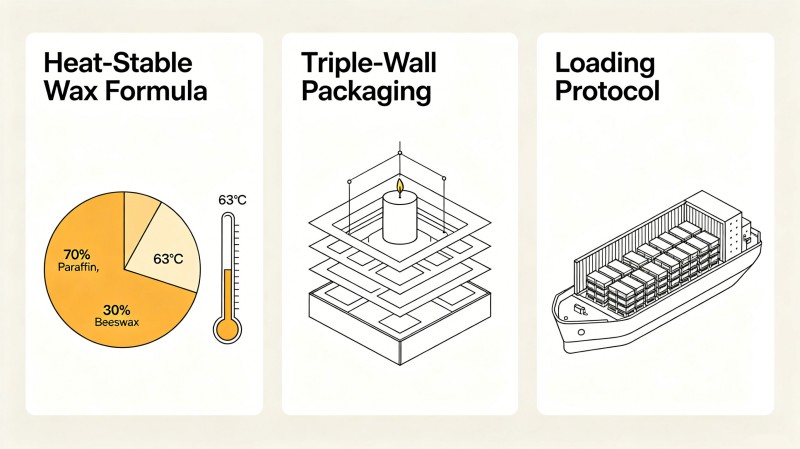
Heat-Stable Wax Formula: We developed a custom blend of 70% high-melt paraffin (melting point 64°C) and 30% beeswax (melting point 62°C), creating a final melt point of 63°C – 11 degrees higher than his previous candles. This meant the candles could survive 45°C warehouse conditions without softening.
Triple-Wall Corrugated Packaging: We replaced single-wall boxes with a 5-layer, triple-wall corrugated design with die-cut foam inserts that held each candle in a suspended position. We tested it on our vibration table – simulating 72 hours of rough transit – with zero breakage.
Container Loading Protocol: Our logistics team provided Chidi with a step-by-step loading guide: how to stack cartons, where to place air cushions, and how to secure pallets to minimize movement during sea transit.
The Process:
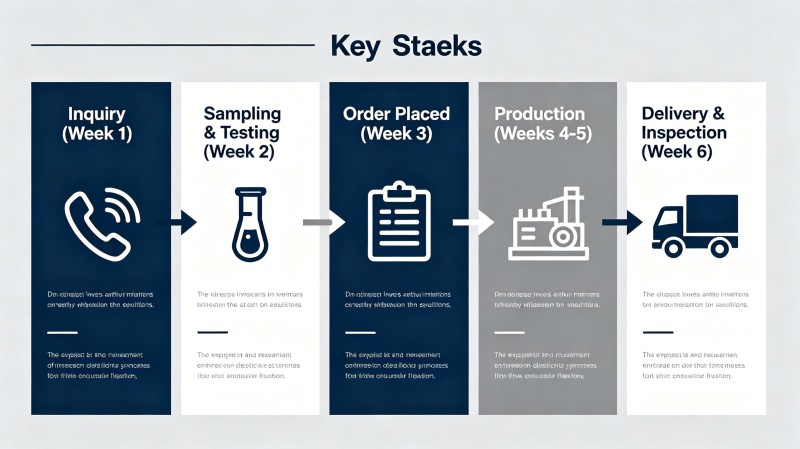
Week 1 – Inquiry (March 5): Chidi emailed after a disastrous shipment where 28% of candles arrived broken. He needed 15,000 candles for the Easter season – 5 scents (coconut, shea butter, lavender, vanilla, and a local favourite – “Naija Spice”).
Week 2 – Sampling: We shipped 20 sample candles in our new packaging via DHL. Chidi's team drop-tested them from 1.5 metres onto concrete – a standard test for Nigerian market handling. All 20 survived. He then left 5 samples in his warehouse for 7 days (temperatures hit 43°C). No softening, no sweating.
Week 3 – Order Placed: 15,000 candles. Production began immediately on our dedicated export line – 8 days.
Week 6 – Delivery: The shipment arrived at Apapa Port, Lagos, on April 2. Chidi's team inspected 500 randomly selected cartons. Breakage: 2.1% – down from 22%. Of the 315 damaged units, most were minor chips, not full cracks.
The Result:
Breakage dropped from 22% to 2.1% – saving Chidi approximately $18,700 per shipment.
His hotel chain client signed a 2-year exclusive supply agreement worth $340,000 annually.
Reorder rate: Chidi placed 4 repeat orders in the next 12 months, quadrupling his annual volume from 15,000 to 62,000 candles.
His retail customers reported zero “melted candle” complaints for the first time.

Why Our Factory Excels for African Markets:
Tropical-formulated wax blends – we have 6 pre-tested “hot climate” recipes for regions with extreme temperatures
ISTA-certified packaging lab – we don't guess. We drop-test, vibration-test, and compression-test every export packaging design.
Regional loading guides – we provide free container-loading training for first-time African importers, reducing transit damage by an average of 75%.
For wholesalers like Chidi, we turn “22% waste” into “98% sellable” – and that's the difference between surviving and thriving in emerging markets.