Company History and Culture
Machines hum and workshop lights glow. Finished goods roll off production lines across countless workshops in China. Some fill households with everyday comfort; others board ocean-going freighters to brighten corners of the world far away.
Looking back on the path of Chinese manufacturing, we see that it has never been an easy journey. It is a story forged bit by bit by an entire nation through wind and rain.
Rewinding the years, we see a land that was once scarred by hardship. Industry was almost non-existent. Well-equipped factory buildings and complete sets of equipment were scarce, and many basic components had to be sourced from abroad.
Yet generations of builders refused to surrender to deprivation. Driven by devotion to their country, they set out bravely from virtually nothing.
When the first Jiefang truck rolled off the assembly line in 1956, crowds thronged the streets to cheer this home-grown industrial achievement. That dark-green truck was far more than a vehicle. It marked the dawn of our nation’s industrial dream.
Countless builders left their hometowns for remote construction sites. Amid material shortages and harsh conditions, they erected workshops brick by brick and refined technologies little by little, laying the bedrock for our national industry. The 156 key projects of the First Five-Year Plan established the earliest framework of national industry, sowing seeds for industries yet to come.
Spring breezes then swept across mountains and seas. Reform and opening-up opened a window onto the wider world. Manufacturers, long used to self-reliance, gained access to global markets, foreign technologies and fresh management ideas.
Workshops for the “three-processing-and-compensation-trade” model lit up. Township enterprises sprang up, and private businesses flourished. We began taking overseas orders, learning international standards, quality control and cost management.
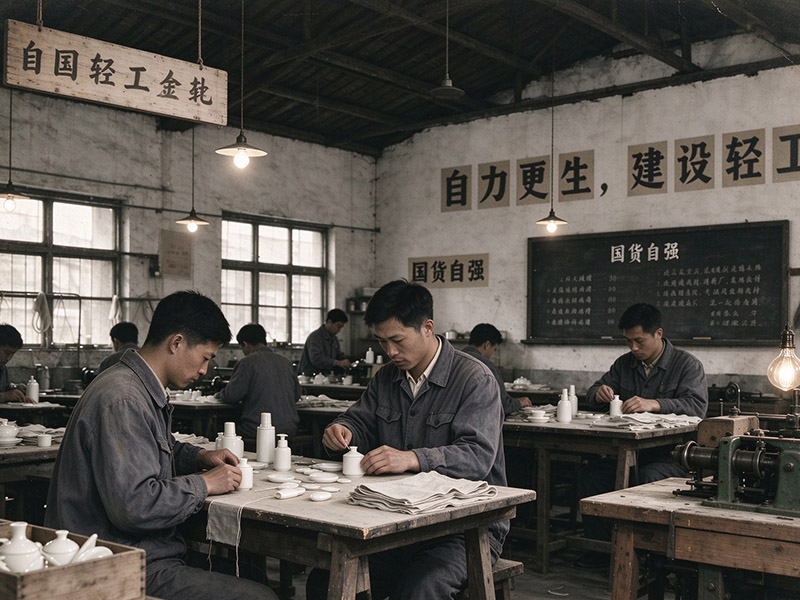
Some dismissed this phase as mere processing. Still, those years honed workers’ skills and knitted domestic supply chains together.
World-renowned enterprises such as Fuyao Glass and Huawei grew from modest beginnings in this era. No strength appears out of thin air. Today’s sophisticated industrial ecosystem traces its roots back to those days of learning and catching-up.
Among the many entrepreneurs seizing the moment were Huaming’s founding generation. Rooted in light manufacturing, they drew nourishment from the maturing domestic industrial base and devoted themselves to researching candle-making.
In 2001, China joined the WTO and fully merged into global industrial currents. Cargo ships sailed across blue waters, carrying Chinese products toward every continent. Benefiting from our complete range of industrial sectors, factories flourished.
China became the only country in the world possessing all industrial categories defined by the United Nations, with hundreds of product categories ranking first globally in output. From heavy machinery to small everyday items such as candles, Chinese goods reached households worldwide.
Riding this export wave, Huaming’s founders saw their early efforts bear fruit. Their scented, household and devotional candles travelled across oceans to families in foreign lands.
Integration into the world meant more than output expansion. Exchanges and competition exposed our gaps and built our capacity for progress. Market opportunities also brought stern tests, pushing local industry to move beyond crude production: we shifted focus from simply making goods to making them well.
Accumulation eventually yielded breakthroughs. Having earned the title “world factory”, Chinese manufacturing refused to stop at mass production and strove for greater heights. Fuxing high-speed trains raced across the land; the C919 jet took to the skies; domestically built large cruise ships set sail; gigantic offshore wind turbines turned against the horizon.
These landmark achievements were not feats of isolated innovation. They rested on decades-long progress in materials, components, craftsmanship and research.
Breakthroughs did not happen overnight. They drew on early locomotive research, quiet advances in power-battery technology and successive efforts by researchers and factory workers.
State-led major projects provided support. Enterprises pursued in-depth research. Talented people kept emerging. Joint efforts lifted our industry to new levels.
Time marched onward and digital transformation ushered in smart manufacturing. Robots moved flexibly inside workshops. Artificial intelligence assisted production scheduling and quality inspection. Old-style factories took on new forms.
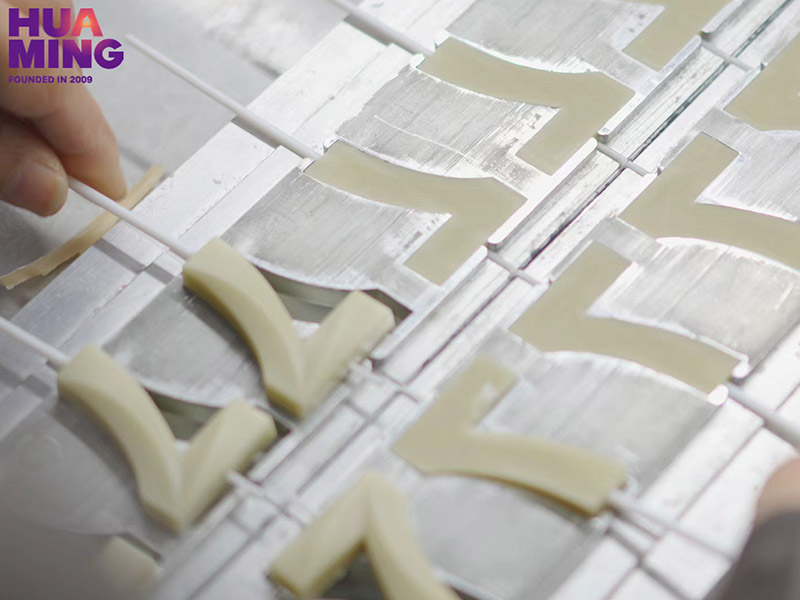
This digital leap did not emerge from nowhere. It grew from seventy-odd years of industrial heritage. Complete supply chains, component suppliers, engineers and skilled workers laid the groundwork for smart-manufacturing implementation.
Lighthouse factories appeared one after another. Digital upgrades spread through traditional workshops. Machines no longer only performed repetitive tasks; data empowered every production step.
Light-industry enterprises such as Huaming also benefited from industrial advancement. Building on the foundation laid by its first-generation founders, Huaming upgraded production workflows, optimised raw-material selection and safety testing, and applied stricter standards to every product.
Still, we understand clearly: scale does not equal perfection. Size gives us solid confidence, yet true strength remains an endless pursuit. Certain underlying core technologies still demand persistent research, and parts of industrial chains call for further improvement.
Manufacturing is an endless long-distance race. Generations of hard-won progress brought us from early Jiefang trucks to new-energy vehicles, from primitive workshops to intelligent factories.
Grand historical narratives ultimately find expression in ordinary factories. Large-scale national projects shine brightly, yet humble light-industry goods such as candles and household articles form an indispensable part of Chinese manufacturing. Our comprehensive industrial system gives rise to both landmark high-tech equipment and numerous niche local enterprises.
Factories big and small thrive on the gifts of the times, reaping the rewards of decades of national hardship and growth. Each holds fast to craftsmanship and sends reliable products to the world.
Mountains and rivers stand silent yet witness every toil. The rise of Chinese manufacturing was no lucky accident. It grew from arduous early-day pioneering, flourished amid reform-and-opening-up dynamics, matured through global-market trials and reached new heights through home-grown innovation.
Our nation endured immense hardship to pave roads for domestic industry. Huaming, alongside countless local enterprises and successive cohorts of practitioners, is a beneficiary of these hard-won opportunities.
Reflecting on the past prepares us for the road ahead. Challenges await, together with boundless promise. Manufacturing is an unceasing journey. From grand national equipment to modest household candles, every market participant plays its part.
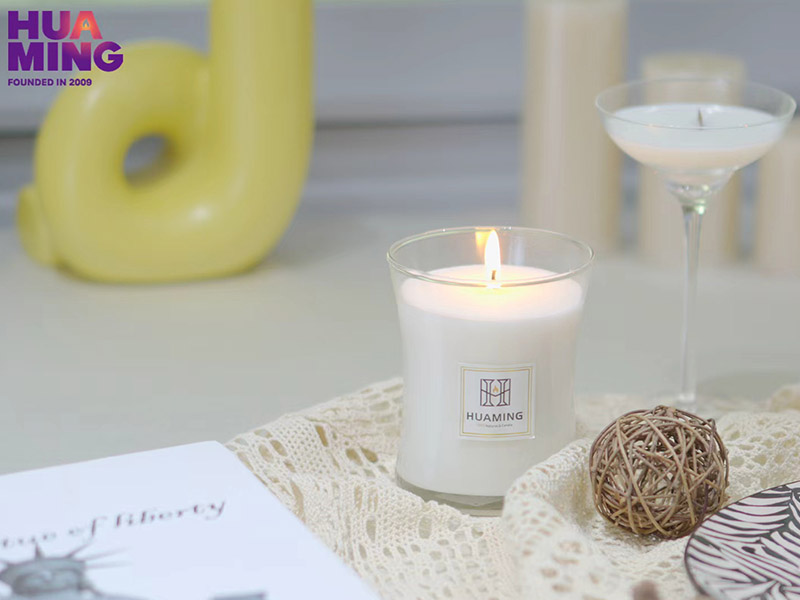
Carrying forward the vision of its founding generation, Huaming remains rooted in this homeland. With candles as its modest medium, Huaming, together with multitudes of dedicated industrial practitioners, inherits the spirit of its predecessors. Upholding original aspirations and overcoming difficulties, we carry craftsmanship-infused Chinese creations across oceans, telling the world the resilient story of our nation.